
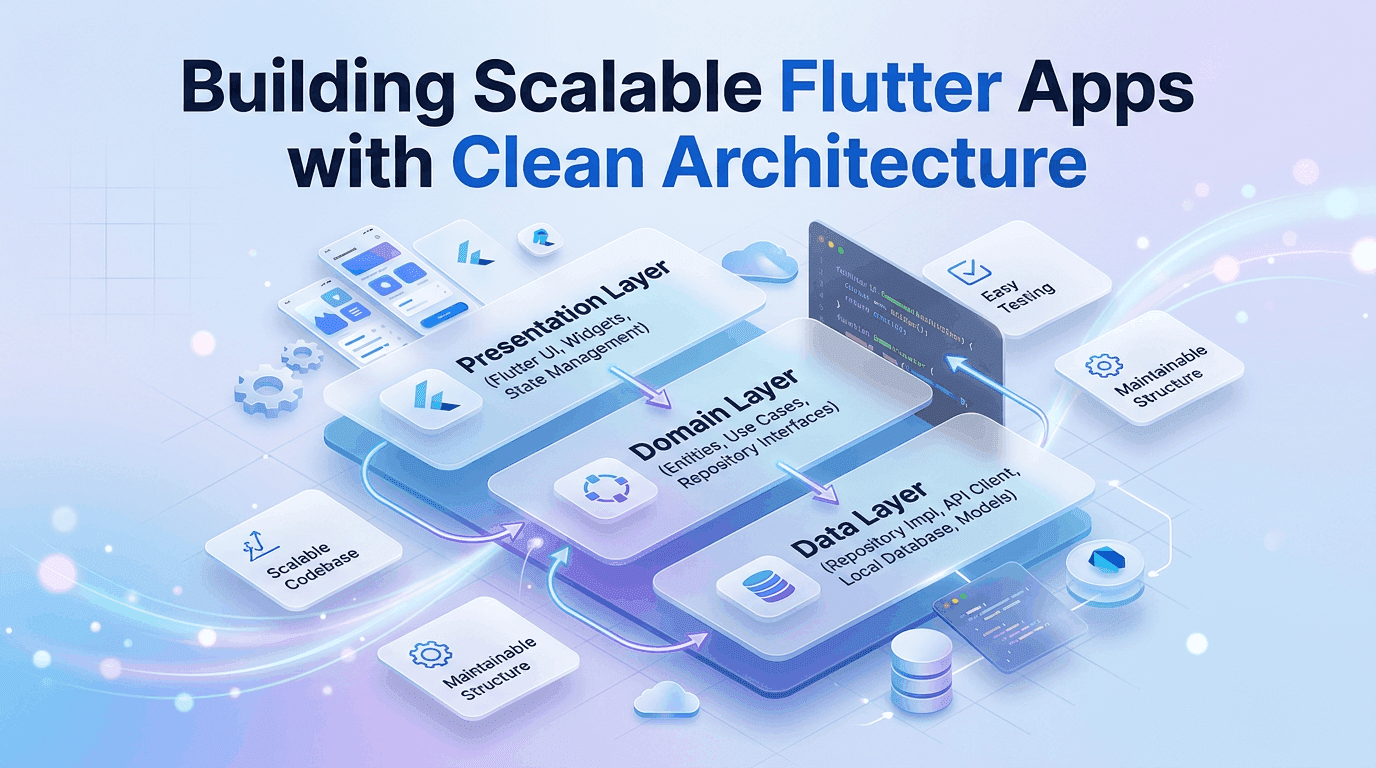
As Flutter apps grow, managing code becomes increasingly difficult. Without proper structure, your project can quickly turn into a messy codebase.
That’s where Clean Architecture comes in.
🧱 What is Clean Architecture?
Clean Architecture is a software design pattern introduced by Robert C. Martin (Uncle Bob).
The core idea is simple: Separate your application into layers, each with a clear responsibility.
🧩 Architecture Layers
│ Presentation Layer │
│ (UI, Controllers) │
└────────▲─────────────┘
│
┌────────┴─────────────┐
│ Domain Layer │
│ (Business Logic) │
└────────▲─────────────┘
│
┌────────┴─────────────┐
│ Data Layer │
│ (API, DB, Models) │
└──────────────────────┘
🎨 Presentation Layer
- Flutter UI (Widgets)
- State management (GetX, Provider, Bloc)
This layer handles user interaction and displays data.
🧠 Domain Layer
- Entities
- Use Cases
- Repository Interfaces
This is the core of your application and contains business logic.
💾 Data Layer
- API calls
- Local database
- Models
- Repository implementation
Responsible for fetching and storing data.
📁 Folder Structure
lib/
├── core/
├── features/
│   └── user/
│       ├── data/
│       ├── domain/
│       └── presentation/
└── main.dart
🔄 Data Flow
🧪 Example Code
Entity
class User {
  final int id;
  final String name;

  User({required this.id, required this.name});
}
Repository
abstract class UserRepository {
  Future<User> getUser(int id);
}
Use Case
class GetUser {
  final UserRepository repository;

  GetUser(this.repository);

  Future<User> call(int id) async {
    return await repository.getUser(id);
  }
}
Controller (GetX)
class UserController extends GetxController {
  final GetUser getUser;

  UserController(this.getUser);

  var user = Rxn<User>();
  var isLoading = false.obs;

  Future<void> fetchUser(int id) async {
    isLoading.value = true;
    user.value = await getUser(id);
    isLoading.value = false;
  }
}
🎯 Why Use Clean Architecture?
- Scalable codebase
- Easy testing
- Clear separation of concerns
- Maintainable structure
⚠️ Common Mistakes
- Mixing UI & logic
- Tight coupling
- Over-engineering
🧩 When to Use
Best for medium to large apps and team projects.
🎉 Conclusion
Clean Architecture may seem complex at first, but it becomes a powerful approach for building professional Flutter apps.